
Support
Guides & software
Quick guides, user manuals, firmware, and datasheets for every Everest Biolabs product. Search below, or jump to your product.
Consumable
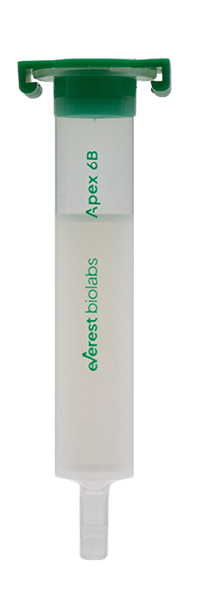
Apex Columns
mini Guides
Apex MM/4B/6B mini quick guidePDFFAQs
How many times can Apex SEC columns be used?
We have tested Apex 4B/6B columns for up to 5 uses.
What is the repeatability after regeneration cycles?
Apex columns have less than 10% CV in EV yield for up to 5 uses when measured with the Atlas EV ELISA. We developed a tightly controlled manufacturing process to ensure the most repeatable columns.
Should I use Apex MM, 6B, or 4B?
Apex MM columns are optimized for maximum EV purity in plasma/serum, ideal for unbiased assays like mass spec and flow cytometry. Apex 6B are optimized for the highest total EV recovery, ideal for targeted downstream analysis (immunoassays, imaging, flow, western blots, pull-downs). Apex 4B are optimized for the highest purity, ideal for unbiased downstream analysis including proteomics and RNA-seq.
Instrument
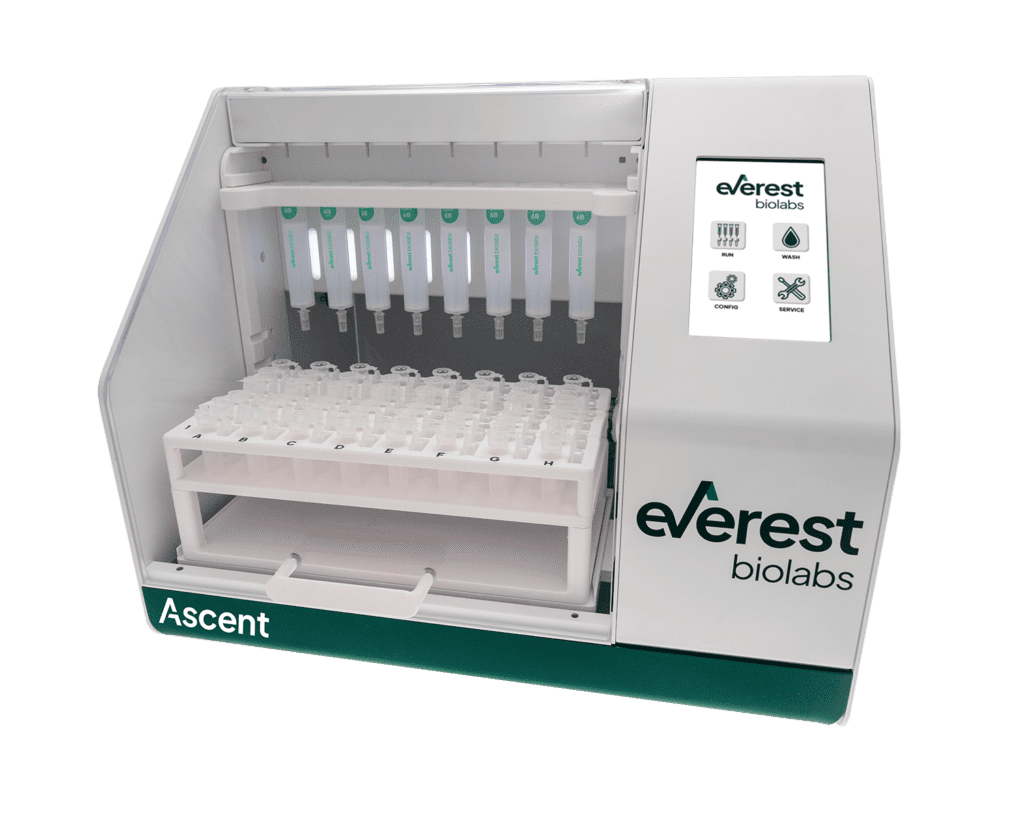
Ascent Instrument
Software
Ascent firmware 1.41ZIPFAQs
How long does it take to purify samples on the Ascent?
Running 1 or 8 Apex SEC columns takes slightly longer than an hour. Since columns are run in parallel, it takes about the same time for any number of columns. First, the columns are washed to remove buffer containing antimicrobial agents (~1 hour). Then the fractions are collected, which takes ~5–15 minutes depending on how many fractions are collected. Apex 4B and 6B columns have the same run time.
Can the Ascent run columns from other suppliers?
Yes. In addition to the Apex columns, the Ascent is compatible with common third-party SEC columns. We also have an Apex empty plastic kit with everything you need to pack your own columns. If you would like support for additional columns, please contact us.
Can the fraction collection sequence be customized?
Yes. The fraction collection sequence on the Ascent is programmable. The user can adjust the discard volume and the fraction volume according to the input sample volume.
What is Column Saver?
Column Saver automatically keeps columns hydrated, preventing them from drying out if you are not near the instrument when the wash or fraction collection completes. It slowly drips buffer into the columns while the Ascent waits for the user (adding samples or removing columns when it completes).
How does the Ascent collect the correct fraction volume?
The Ascent has a high-precision liquid handling system combined with an advanced optical drop detection platform to precisely collect fractions. This approach is robust to vibrations and can be used on any lab bench.
Instrument
Summit Instrument
Software
Summit firmware 1.30ZIP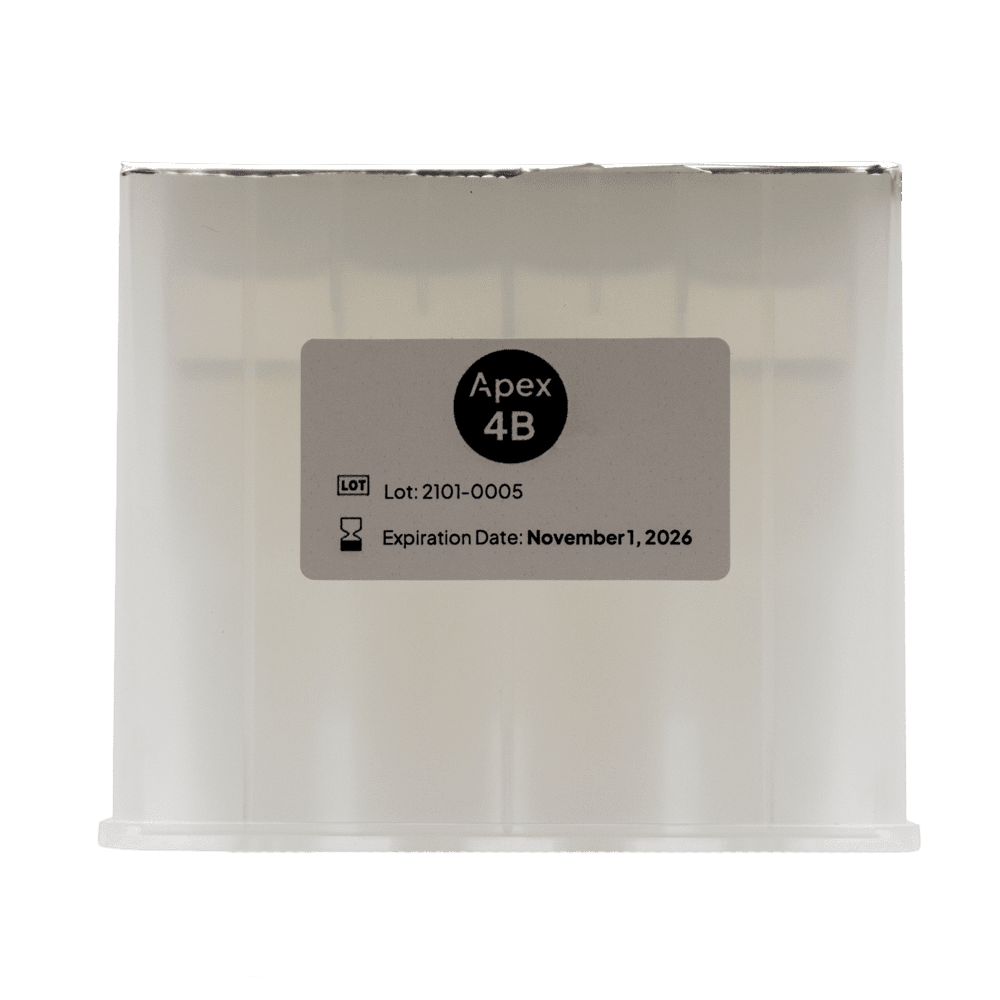
Consumable
Apex Plates
FAQs
Does the entire plate need to be used at once?
No. The plate seal can be cut to use only 4 wells at one time, and the Summit instrument allows skipping used wells so you can maximize the utility of each Apex plate.
How many times can Apex plates be used?
We have tested wells for up to 5 uses.
Should I use Apex 6B or Apex 4B?
Apex 6B are optimized for the highest total EV recovery, ideal for targeted downstream analysis. Apex 4B are optimized for the highest purity, ideal for unbiased downstream analysis including proteomics and RNA-seq.
Assay
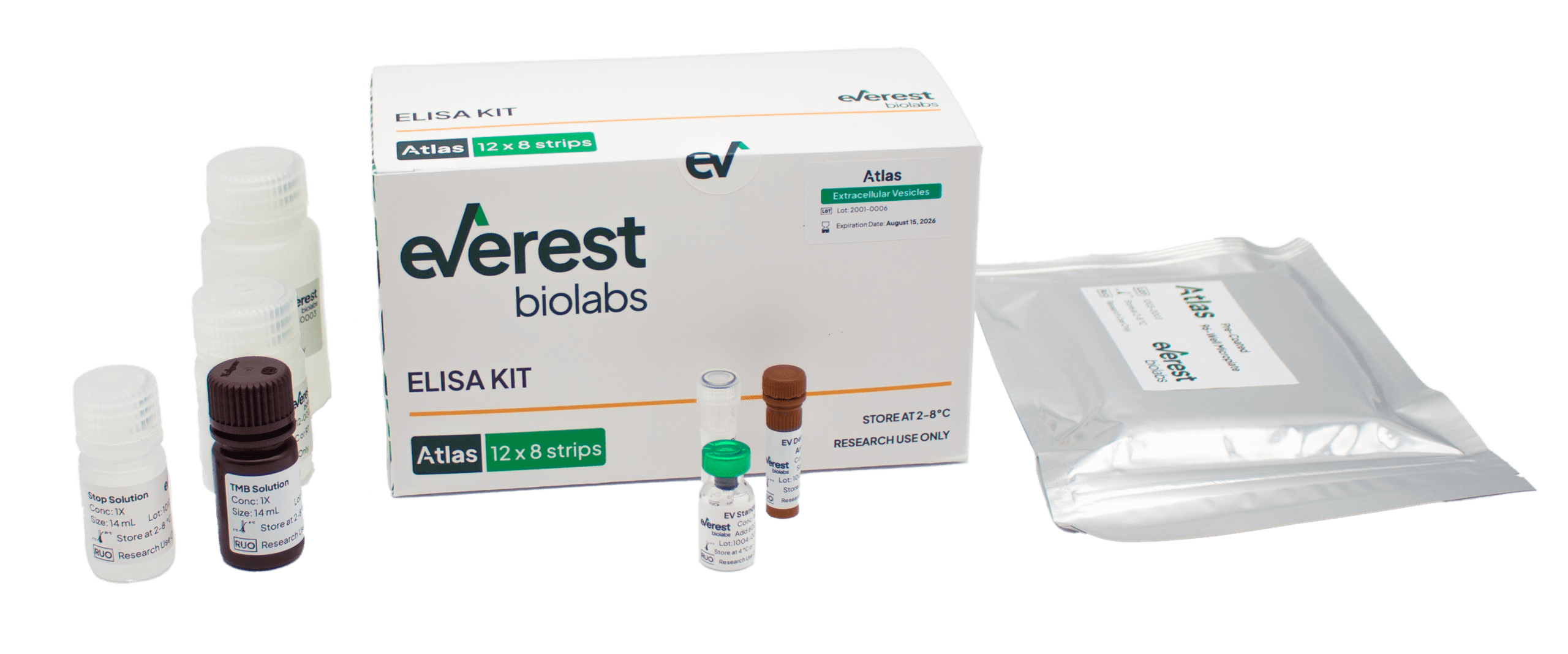
Atlas ELISA Kits
FAQs
How long does it take to run a sample?
The Atlas Human EV ELISA has one 3-hour incubation and one wash step. Total hands-on time is ~15 minutes for plating and washing.
What are the capture and detection antibodies?
The Atlas Human EV ELISA uses antibodies against the tetraspanins CD9, CD63, and CD81, used as both capture and detection antibodies.
What is the detection limit?
The average LOD for the Atlas Human EV ELISA is < 1e8 EVs/mL. For the Atlas Lumi Human EV ELISA, the average LOD is < 1e7 EVs/mL.
Can it quantify EVs directly from biofluids?
Yes. The ELISA has been validated in plasma, serum, urine, cell culture media, and cerebrospinal fluid (CSF).
Do you have to use the entire plate at once?
No. The Atlas Human EV ELISA kit has 12 strips of 8 wells. You can run individual strips or the full 96-well plate.
Instrument
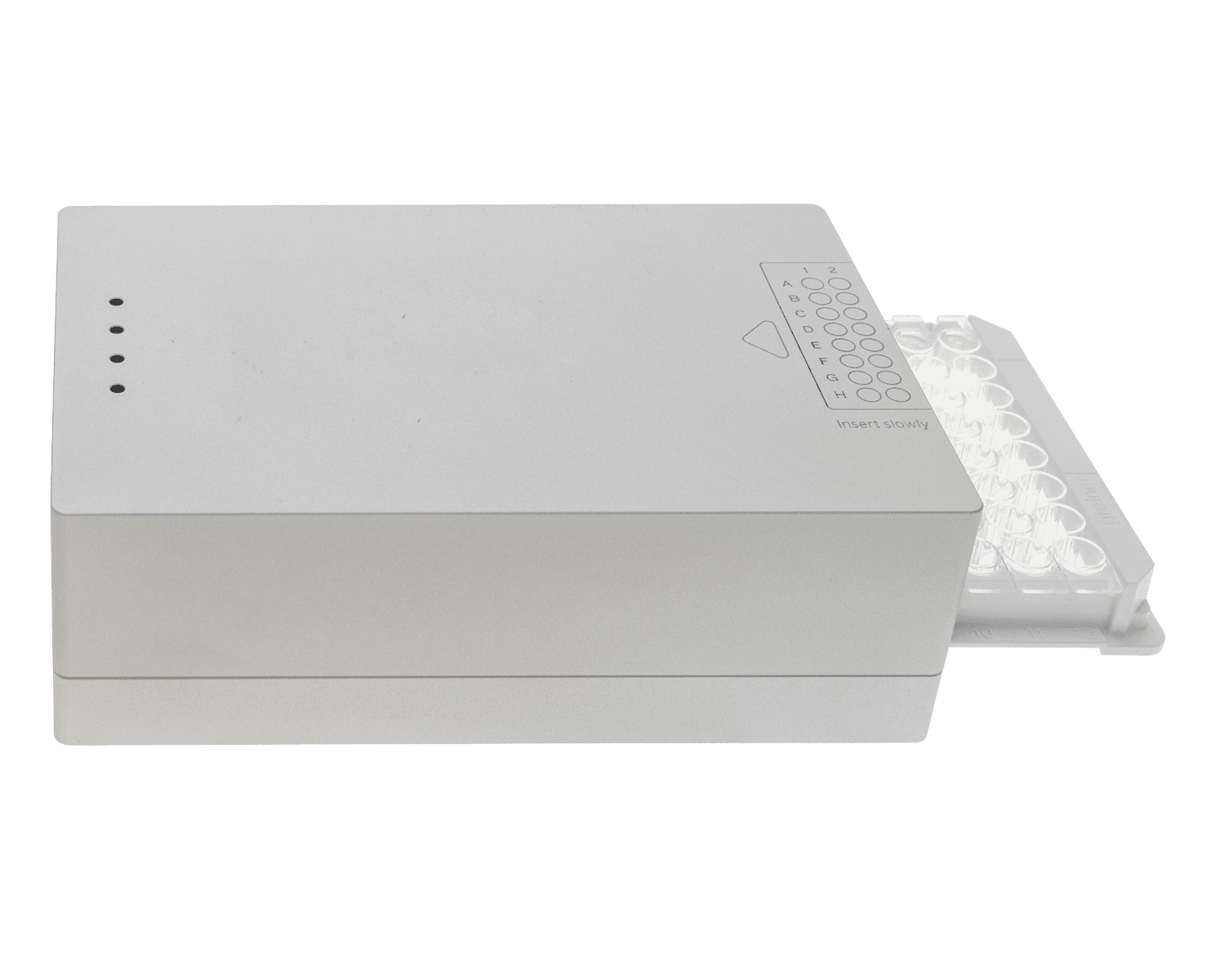
Atlas ELISA Reader
Software & links
Reader software & instructions (Byonoy)LINKFAQs
What does the reader measure?
The Atlas ELISA reader measures absorbance simultaneously across a 96-well plate.
How long does it take to measure a plate?
It only takes a few seconds to measure an entire 96-well plate.
Can’t find what you need?
Our scientists are happy to help with installation, protocols, or troubleshooting.