
Resources
Application notes
Technical notes on EV isolation and analytics across the Everest Biolabs platform. Read any note online, or download it as a PDF to share with your team.
Brochures
Product brochures
One-page overviews of each Everest Biolabs product family, download and share with your team.
Library
Application notes
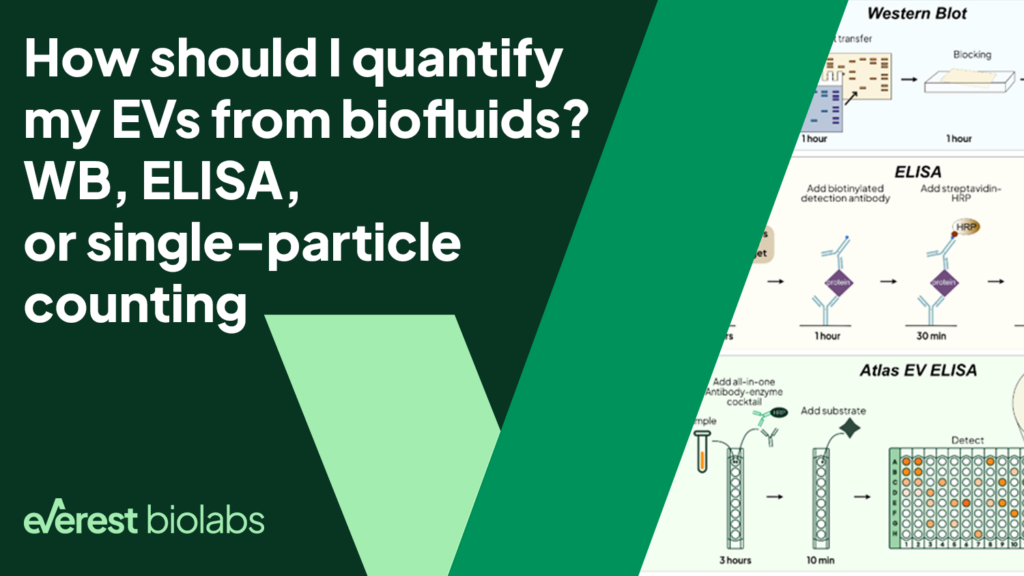
How should I quantify my EVs from biofluids? Western Blot, ELISA, or single-particle counting
The need for protein markers to distinguish particles from EVs Accurate measurement of extracellular vesicles (EVs) in biofluids is essential for optimizing EV isolation workflow, EV biomarker discovery, and translational research. Label-free single-particle methods (e.g., flow cytometry, NTA, TRPS/MRPS) are the go-to methods for quantifying EVs. These methods detect particles within a defined size range […]
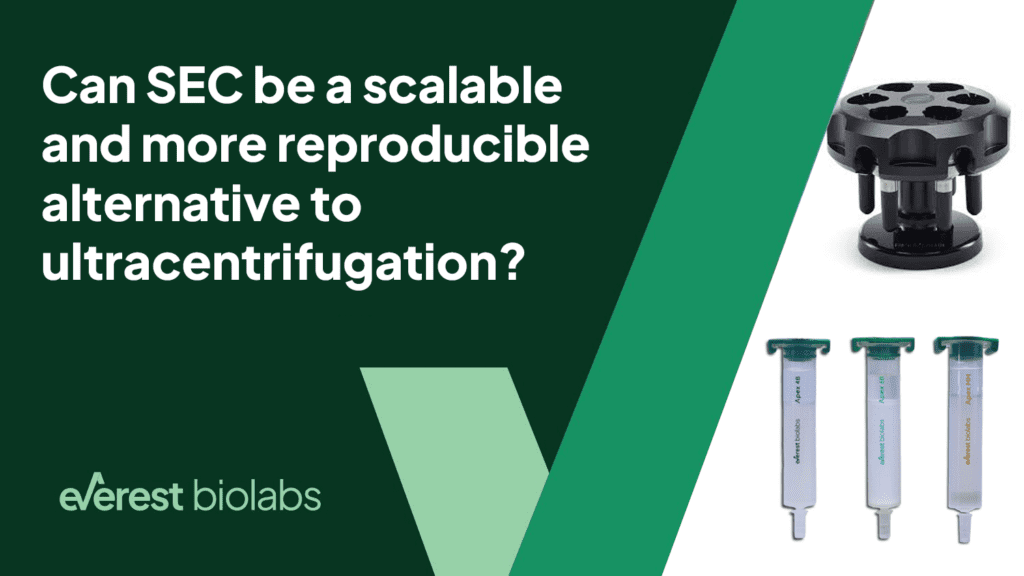
Can SEC be a scalable and more reproducible alternative to ultracentrifugation?
The shift toward gentler isolation EV labs are moving away from the rotor toward Size Exclusion Chromatography (SEC). The reason: SEC preserves EV biophysical integrity and functionality more effectively than ultracentrifugation (UC), which subjects vesicles to high gravitational forces that can cause aggregation, membrane damage, and reduced biological activity.1-4 In the table below, we compare […]

Ascent-coupled ultrafiltration enables concentrated EV recovery after SEC with Apex columns
Size exclusion chromatography (SEC) is widely used to isolate extracellular vesicles (EVs) from plasma; however, the EV-containing fractions obtained are often dilute, which can limit downstream analyses requiring low input volumes. This dilution becomes more pronounced as smaller input sample volumes are processed on an SEC column of fixed dimensions. Although the number of collected […]

When Every Fraction Counts: How the Ascent Platform Transforms EV Isolation
The Hidden Bottleneck in EV Research For scientists working with extracellular vesicles (EVs), the promise of discovery is often slowed by the realities of the bench. EV isolation, especially via size-exclusion chromatography (SEC), is a widely used and trusted method, but it comes with challenging compromises: manual labor, inconsistent drip rates, and subtle variations between […]

Advancing Plasma-Derived Extracellular Vesicle Analysis Through High-Purity Isolation and Particle-Specific Quantification
AuthorsTal Gilboa, Ph.D.*, Dr. Christina Klasen**, Dr. Lena Ball** A collaboration of Introduction Everest Biolabs and Particle Metrix have partnered to establish a unified workflow for extracellular vesicle (EV) analysis, combining high-purity size exclusion chromatography (SEC) isolation using Apex SEC columns with precise quantification via advanced nanoparticle tracking analysis (NTA). One of the major challenges […]

Atlas EV ELISA: A scalable solution for extracellular vesicle quantification
Quantifying extracellular vesicles (EVs) is essential for optimizing isolation workflows, developing EV-based assays, and advancing biomarker discovery. Single particle techniques such as flow cytometry and nanoparticle tracking analysis (NTA) face limitations in capital cost, throughput, and reproducibility, since they require skilled operators and extensive optimization when working from complex biofluids like serum and plasma (1-5). […]

Drip speed matters: Enhance EV isolation reproducibility with Apex columns and validate using the Atlas ELISA
Column-to-column variability in extracellular vesicle (EV) isolation using size exclusion chromatography (SEC) can significantly impact downstream results—shifting the EV elution profile and compromising reproducibility. Here, we explore how drip speed influences EV yield and fractionation, and how Everest Biolabs’ manufacturing standards—including drip-speed QC and EV profiling with the Atlas EV ELISA—ensure consistent and reliable EV […]
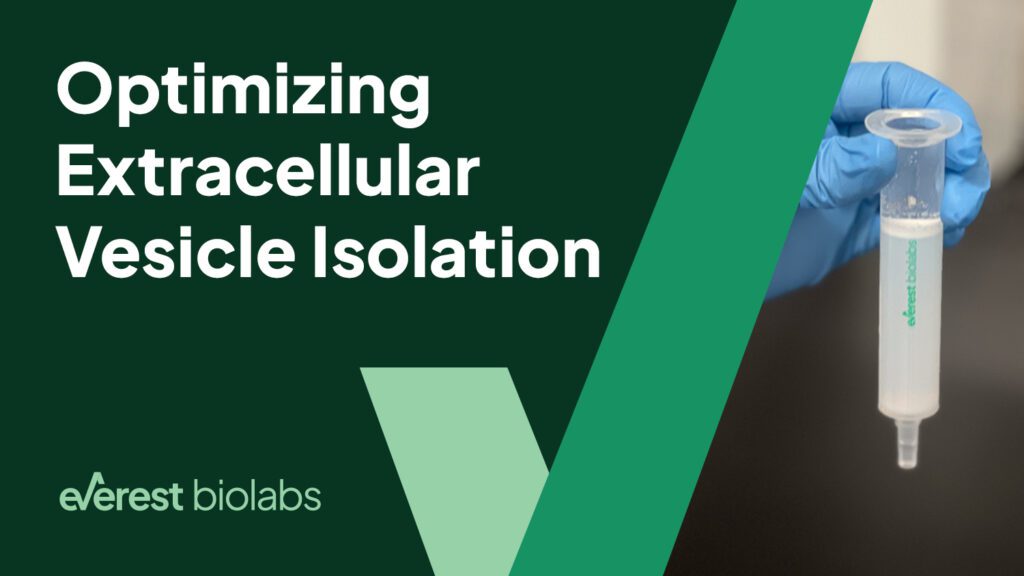
Optimizing extracellular vesicle isolation: Why Apex MM columns outperform conventional SEC columns for isolating EVs from plasma or serum
IntroductionExtracellular vesicles (EVs) are essential to diagnostics and therapeutic research, serving as rich sources of biomarkers and key mediators of intercellular communication. Size Exclusion Chromatography (SEC) is widely used for isolating EVs due to its simplicity, reproducibility, and gentle purification conditions. In our previous white paper, “Why is SEC becoming the most widely used EV isolation […]
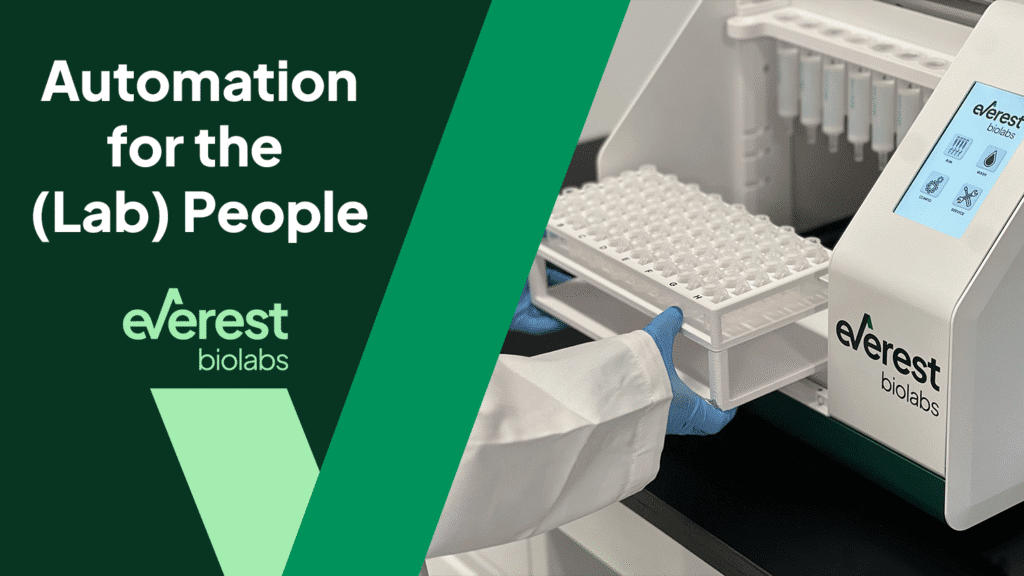
Automation for the (Lab) People: How Everest Biolabs is Revolutionizing EV Isolation with SEC Automation
Over the past two decades, extracellular vesicles (EVs) have transitioned from being considered cellular debris to taking center stage as powerful mediators of intercellular communication. These nanoscale particles have become critical to the development of new tools in both therapeutics and diagnostics. Whether engineered as viral-free delivery systems for genes and drugs or analyzed in […]
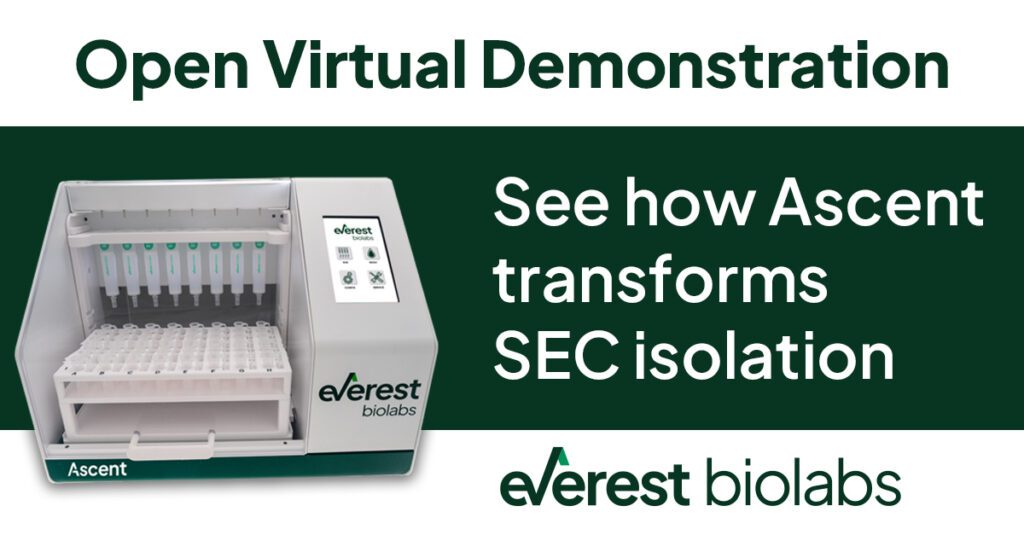
Virtual demonstration of the Ascent instrument for automated EV isolation by size exclusion chromatography
Everest Biolabs presents a virtual demonstration of the Ascent instrument, an advanced system for automated extracellular vesicle (EV) isolation using size exclusion chromatography (SEC).
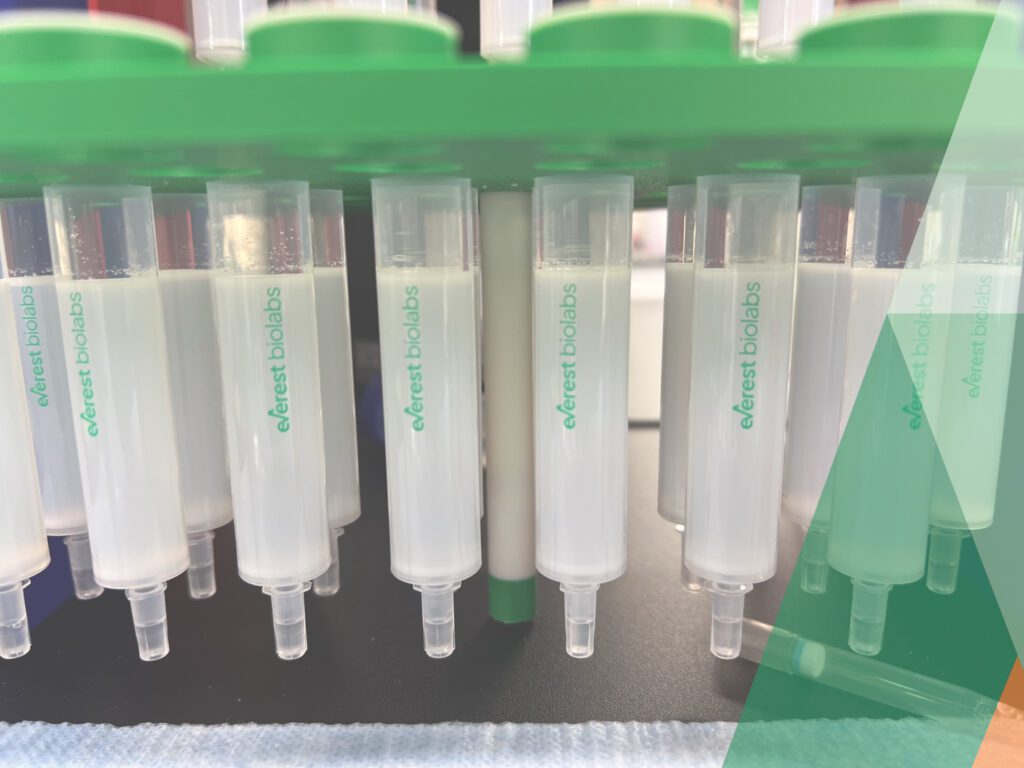
Why is SEC becoming the most widely used EV isolation technique?
Size Exclusion Chromatography (SEC) is a commonly used method for extracellular vesicle (EV) and exosome isolation from biological fluids. SEC is easy, reproducible, and provides a high yield of purified EVs that retain their functionality (Table 1). Furthermore, the minimal information for studies of extracellular vesicles (MISEV2023) guidelines highlight SEC as a very accessible size-based […]
No notes in this category.
Have a question about your application?
Our scientists can help you design an EV isolation and analysis workflow for your sample type.